JOHNNY RAY HUDSON | 12 hours ago

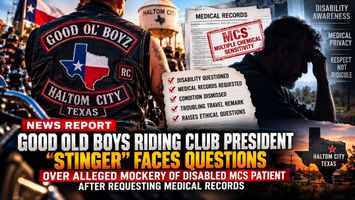
Good Old Boys Riding Club President “Stinger” Faces Questions Over Alleged Mockery of Disabled MCS Patient After Requesting Medical Records

A Facebook dispute involving a self-identified Texas riding club president has raised serious questions about disability awareness, medical privacy, and compassion.

Johnny Ray Hudson, an American living with severe Multiple Chemical Sensitivity (MCS) in Spain, says Nic Murphy, known as “President Stinger,” requested medical evidence of his disability, dismissed the documentation he provided, and made a troubling remark about his return to the United States.

The MCS Survival Foundation examines the reported exchange and the broader challenges faced by people living with severe, often invisible disabilities.

A Facebook Disagreement Becomes a Disability Controversy

What began as a Facebook discussion about motorcycles, personal spending, charity, and compassion has developed into a dispute involving disability, medical privacy, and the conduct of a self-identified Texas riding club president.

Johnny Ray Hudson, an American citizen living in Extremadura, Spain, reports that Nic Murphy, who publicly identifies himself as “GOBMC FT WORTH CHAPTER PRESIDENT STINGER,” challenged the legitimacy of his severe Multiple Chemical Sensitivity (MCS).

Hudson says Murphy requested medical evidence of his disability and indicated that providing documentation could lead to assistance or an apology.

Hudson says he complied, sharing sensitive medical information in the hope of resolving the disagreement.

Instead, according to messages Hudson has preserved, Murphy dismissed the documentation and ridiculed his condition.

The exchange raises a broader question for disability advocates: Why should a disabled person have to disclose private medical information to a stranger simply to be treated with compassion?

“The Chemical Thing Is Laughable”

Among the statements Hudson attributes to Murphy is:

“Clavicle maybe but the chemical thing is laughable.”

Hudson reports that Murphy made this remark while discussing his medical conditions, including a serious clavicle injury and severe chemical sensitivities.

In another message, Murphy reportedly wrote:

“Nothing about what u provided me is legitimate lol. Johnny ur a joke. I hope one day you find clarity and peace.”

For Hudson, the comments were particularly troubling because he says he had already provided medical evidence in good faith.

Hudson says he was not asking Murphy to act as his doctor. He was trying to demonstrate that his disability was real, and he felt ridiculed rather than understood.

The complete message history has not been independently authenticated. The quoted excerpts should be evaluated alongside their original screenshots and surrounding context.

Six Years Without Basic Human Necessities

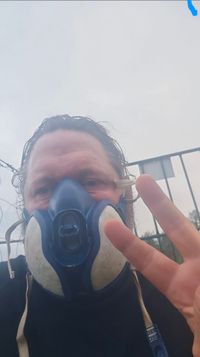
Hudson describes living outdoors in rural Spain for approximately six years because of severe reactions to chemical exposures commonly encountered in buildings, vehicles, clothing, and everyday consumer products.

He reports being unable to safely access many ordinary indoor environments, including medical facilities, because of exposure to fragrances, cleaning agents, detergents, and other chemical triggers.

His circumstances have left him without amenities that most people consider essential, including a conventional toilet and a reliable hot shower.

He also reports that a clavicle fracture requiring surgical assessment has remained untreated surgically because medical facilities have been unable to assure the chemical-exposure precautions he needs.

Hudson says his medical documentation includes specialist assessments describing substantial disability and the need for ongoing assistance.

Importantly, his condition does not mean that he cannot be around other people. The barrier is exposure to triggering chemicals that may be carried on clothing or present in surrounding environments.

The resulting isolation is not simply a lifestyle choice. Hudson describes it as “medical exile.”
Medical Privacy Should Not Be the Price of Compassion

One of the most concerning aspects of Hudson's account is the alleged request for medical documentation.

Hudson says Murphy suggested that providing proof of his disability might result in an apology or assistance.

Hudson reports that he shared the requested material, only to have its legitimacy rejected.

Medical records can contain deeply personal information. People living with disabilities should not feel compelled to disclose their medical histories to private individuals merely to establish that they deserve respectful treatment.

The Americans with Disabilities Act provides protections against disability discrimination and establishes rules concerning disability-related medical inquiries in covered circumstances, particularly employment.

However, the ADA does not automatically make it unlawful for one private individual to ask another for medical records during a personal disagreement. Whether any law applies depends on the relationship, setting, and conduct involved.

The concern raised here is therefore both ethical and practical: requesting sensitive evidence and then ridiculing the person who provides it can discourage people with disabilities from speaking openly about their experiences.

“Guess U Won't Be Coming Back State Side”

Hudson also reports receiving another troubling comment from Murphy:

“Disrespect my club….. guess u won't be coming back state side.”

Hudson, who remains an American citizen despite living in Spain, says he interpreted the statement as intimidating.

The wording does not establish that Murphy could interfere with Hudson's travel or that a criminal threat occurred. Nevertheless, the comment warrants clarification, particularly because Hudson says it arose during an already contentious discussion about his disability.

A riding club president has no special authority to determine whether an American citizen may return to the United States.

Hudson believes the statement illustrates how quickly a disagreement about compassion can turn into personal hostility.

The Good Old Boys Riding Club and Its Stated Values

In a separate Facebook comment, Murphy defended the organization he represents and challenged Hudson to research its charitable activities.

Murphy wrote, in part:

“Do some fucking research before you run your ignorant mouth.”

He then identified himself as:

“GOBMC FT WORTH CHAPTER PRESIDENT STINGER. AKA Nic Murphy.”

His identification as chapter president is relevant because it places his comments in the context of an organization whose reputation and community involvement he was defending.

Motorcycle and riding clubs can participate in fundraising, charitable rides, community service, and assistance to people in need.

This report does not dispute any charitable work undertaken by the Good Old Boys Riding Club. Nor does it suggest that other club members necessarily share Murphy's reported statements.

Rather, the question is whether the public conduct of someone identifying himself as a chapter president is consistent with the compassion he invokes when defending the club.

If compassion is central to a riding club's identity, how should its representatives respond when someone describes living with a severe disability?

The Burden of Proving an Invisible Disability

Multiple Chemical Sensitivity presents a difficult challenge for people whose symptoms and environmental limitations are not readily visible to others.

Someone may appear physically capable of speaking, writing, taking photographs, or participating in online discussions while still experiencing severe restrictions in ordinary environments.

This disconnect can produce disbelief.

For people with severe MCS, the consequences may extend beyond uncomfortable conversations. Chemical-exposure barriers can affect housing, transportation, healthcare, employment, and social participation.

Hudson's account highlights an additional burden: repeatedly having to defend the legitimacy of a disabling condition to people who have no clinical role in evaluating it.

Medical documentation can be relevant when applying for benefits, seeking accommodations, or obtaining appropriate treatment.

It should not become an informal admission ticket to human dignity.

A Facebook Disagreement Becomes a Disability Controversy

The dispute began amid a broader discussion about spending on recreational motorcycles and the willingness of people to assist neighbors who lack basic necessities.

Hudson had questioned why expressions of enthusiasm for expensive recreational purchases sometimes appear more readily than offers of practical assistance to people struggling with disability.

The discussion prompted objections from motorcycle enthusiasts who defended the value of riding, personal freedom, and the charitable contributions of motorcycle organizations.

Those are legitimate subjects for debate.

But disagreement over motorcycles does not justify dismissing someone's disability without adequate grounds.

A person can defend recreational riding and still recognize the dignity of someone living with serious medical limitations.

Likewise, an organization can be proud of its charitable work while remaining open to questions about how its representatives communicate with disabled members of the public.

An Opportunity for Clarification and Response

The MCS Survival Foundation believes Murphy and an authorized representative of the Good Old Boys Riding Club should have an opportunity to address the statements attributed to him.

Questions deserving clarification include whether Murphy requested Hudson's medical records, whether he suggested that providing them might lead to an apology or assistance, what he meant by dismissing the chemical condition as laughable, and what he intended by the comment about returning stateside.

It is also important to establish whether Murphy's statements were made solely in a personal capacity or in any official representative capacity.

No response from Murphy or the organization has been independently verified for inclusion in this draft.

A Larger Message for the MCS Community

For Hudson, this experience is about more than a Facebook disagreement.

It concerns what happens when someone living with severe disability attempts to explain circumstances that others cannot easily see or understand.

He describes living without ordinary household facilities, facing substantial barriers to healthcare, and struggling to secure basic assistance.

Against that background, having his medical evidence dismissed was especially distressing.

The MCS Survival Foundation encourages respectful discussion, responsible handling of medical information, and greater understanding of environmental accessibility needs.

People with disabilities should not have to repeatedly expose their private medical histories to prove they deserve consideration.

Compassion is not demonstrated merely by the charities an organization supports. It is also demonstrated by how individuals treat the person in front of them.

About the MCS Survival Foundation

The MCS Survival Foundation advocates for people living with severe Multiple Chemical Sensitivity, particularly those experiencing profound environmental restrictions, barriers to medical care, and difficulty obtaining basic necessities.

Its mission includes raising public awareness, documenting the lived experiences of people with severe MCS, and promoting practical support and dignity for those facing extreme disability-related isolation.

Website: mcssurvivalfoundation.org

Editorial disclosure: This article presents Hudson's account of a personal dispute and includes statements attributed to another individual. The complete conversation, original screenshots, medical documentation, organizational affiliation, and any response from the named individual or organization should be independently verified before publication. The Foundation does not allege that the entire riding club participated in or endorsed the reported conduct.

MCS Survival Foundation works to raise awareness and advocate for people living with severe Multiple Chemical Sensitivity. Share this story to help make invisible barriers visible..

JOHNNY RAY HUDSON

More Posts

RFK JR., 89 DOCTORS AND THE MOLDY HOUSE: THE ILLNESS MEDICINE STILL CAN’T EXPLAINRFK JR., 89 DOCTORS AND THE MOLDY HOUSE: THE ILLNESS MEDICINE STILL CAN’T EXPLAIN
RFK JR., 89 DOCTORS AND THE MOLDY HOUSE: THE ILLNESS MEDICINE STILL CAN’T EXPLAIN

We write for customers, neighbors, and anyone interested in what we do and how we do it. This is a place to stay connected, learn something new, and get a closer look at what’s happening around our business.

The Million-Dollar Life That Mold Took AwayThe Million-Dollar Life That Mold Took Away
The Million-Dollar Life That Mold Took Away

Johnny Ray Hudson built businesses, photographed events, traveled with his father and created an online community numbering in the hundreds of thousands. In 2020, more than $1 million in deposits and credits moved through his Free Pipe Friday business account. Today, he sleeps in a hammock beneath tarps in rural Spain, living almost entirely outdoors with severe Multiple Chemical Sensitivity.

A Special Report

U.S. CITIZEN IN DISTRESS: AN AMERICAN IS DYING IN A FIELD IN SPAINU.S. CITIZEN IN DISTRESS: AN AMERICAN IS DYING IN A FIELD IN SPAIN
U.S. CITIZEN IN DISTRESS: AN AMERICAN IS DYING IN A FIELD IN SPAIN

He is severely disabled. He lives outdoors. He says ordinary buildings can make him dangerously ill, appropriate medical care has become extraordinarily difficult to access, and organization after organization has told him his circumstances are beyond what they can handle. He has asked governments, hospitals, charities, disability groups, churches, friends and family for help. The explanations change. The American remains in the field.

SANTIAGO DE ALCÁNTARA, Spain —

An American citizen is living in a field in Spain.

Read that sentence again.

Not camping.

Not backpacking.

Not spending a summer beneath the stars.

When Even the Hospital Is Out of ReachWhen Even the Hospital Is Out of Reach
When Even the Hospital Is Out of Reach

Johnny Ray Hudson has Grade IV Multiple Chemical Sensitivity. His doctor says hospitals and operating rooms require special environmental precautions. But in a nation with roughly 6,100 hospitals, a deep search of the public record turned up only three U.S. institutions known to have developed dedicated MCS protocols—and every one of those records is more than two decades old.

SANTIAGO DE ALCÁNTARA, Spain — If Johnny Ray Hudson suffers a heart attack tonight, conventional medical advice is simple.

Get to a hospital.

If he suffers a stroke, get to a hospital. If he falls and fractures another bone, get to a hospital. If a wound needs stitches, if an infection turns dangerous, if abdominal pain becomes a surgical emergency, if he needs imaging, medication, oxygen, anesthesia or intensive care, the answer is supposed to remain the same.

A Broken Bone, a Suspected Disease, and a Health System That Couldn’t Treat BothA Broken Bone, a Suspected Disease, and a Health System That Couldn’t Treat Both
A Broken Bone, a Suspected Disease, and a Health System That Couldn’t Treat Both

His clavicle needed surgery. Doctors suspected Multiple Chemical Sensitivity and required further medical evaluation before the operation could proceed. The diagnosis was ultimately confirmed as severe, Grade IV MCS. But the diagnosis did not return Johnny Ray Hudson to the operating room. More than a year later, the documents surrounding his case tell a larger story about what happens when medical care exists — but a disabled patient cannot reliably access it.

About This BlogAbout This Blog
About This Blog
We write for customers, neighbors, and anyone interested in what we do and how we do it. This is a place to stay connected, learn something new, and get a closer look at what’s happening around our business.