Strip everything else away.
Forget the acronyms.
Forget the bureaucracies.
Forget the arguments.
Forget Facebook.
Forget politics.
Forget jurisdiction for sixty seconds.
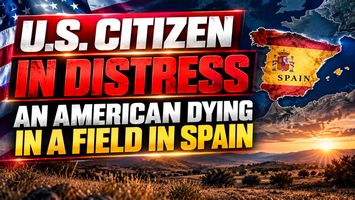
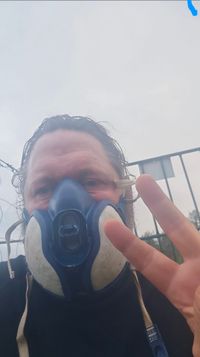
There is a severely disabled human being living outdoors.
He says he cannot reliably access some of the basic infrastructure most of us consider indispensable to human life.
He says obtaining food requires assistance.
He says sanitation and hygiene require improvisation.
He says conventional shelter can be incompatible with his condition.
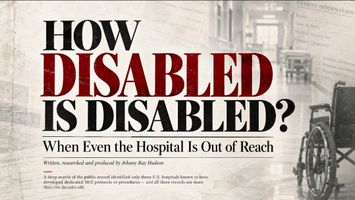
He says medical care has repeatedly collided with that same disability.
He says he has told people.
He says he has asked for help.
He says he has contacted virtually every category of institution people keep telling him to contact.
And he says the recurring message has been some version of:
Your situation is too complicated.
Perhaps the correspondence will show that every institution had legitimate limitations.
Perhaps every organization can explain precisely what it could and could not do.
Those explanations deserve to be heard.
But after the final explanation is printed, there will still be one fact sitting underneath all of them:
The American is still in the field.
That is the story.
Not whether one charity failed.
Not whether one hospital failed.
Not whether one government employee failed.
Not whether one relative failed.
The story is what happens when every individual part of a system can explain why it isn't responsible for the whole human being.
Because the human being doesn't disappear when responsibility ends.
Johnny Ray Hudson is still there.
Still severely disabled.
Still outside.
Still getting older.
Still asking.
And still waiting for somebody, somewhere, to answer a question that should make every comfortable person uneasy:
HOW CAN AN AMERICAN CITIZEN BECOME TOO COMPLICATED TO HELP—AND THEN SIMPLY BE LEFT TO LIVE AND DIE IN A FIELD?