JOHNNY RAY HUDSON | 11 hours ago

RFK JR., 89 DOCTORS AND THE MOLDY HOUSE: THE ILLNESS MEDICINE STILL CAN’T EXPLAIN

We write for customers, neighbors, and anyone interested in what we do and how we do it. This is a place to stay connected, learn something new, and get a closer look at what’s happening around our business.

RFK JR., 89 DOCTORS AND THE MOLDY HOUSE: THE ILLNESS MEDICINE STILL CAN’T EXPLAIN

Robert F. Kennedy Jr. says a mold-contaminated home devastated his family and sent one son through 89 doctors before the family found what Kennedy believes was the answer. His family's history—and an intriguing timeline involving Kennedy's own neurological voice disorder—raises a much larger question: What happens when you leave the contaminated building, but the illness comes with you?


There was a time when houses leaked air.


Through old windows. Around doors. Through cracks, floorboards and imperfect construction.


That was terrible for energy efficiency.


But those buildings also exchanged large amounts of indoor and outdoor air without anyone installing a sophisticated ventilation system.


Then we got better at building.


We insulated. We weather-stripped. We installed vapor barriers. We replaced drafty windows. We sealed gaps. We constructed increasingly tight buildings to conserve energy and control temperature.


That wasn't a mistake. Properly designed modern buildings can provide excellent indoor air quality.


But we changed something fundamental:


We replaced accidental ventilation with engineered ventilation.


And engineered buildings have to work.


When moisture enters through a roof, plumbing, walls or condensation and isn't adequately removed, building materials can support microbial growth. When ventilation is inadequate, pollutants generated indoors can accumulate.


The building intended to protect its occupants can become part of their exposure.


And because people spend enormous portions of their lives indoors, what happens inside buildings matters enormously.


THE MOLDY HOUSE

This question has become personal for one of America's most recognizable health officials: U.S. Health and Human Services Secretary Robert F. Kennedy Jr.


Kennedy has publicly described serious illness in his family that he associates with a mold-contaminated home.


According to Kennedy's account, his family ultimately faced an extraordinary medical ordeal, including one son who went through 89 doctors before reaching what Kennedy considers the correct diagnosis.


That number deserves to stand alone.


89 DOCTORS

If a family with substantial resources and access to medicine can go through that many physicians searching for an explanation, what happens to everybody else?


What happens to the family that can afford three doctors?


What happens when insurance stops paying?


What happens to someone who can't move?


What happens when somebody leaves the building—


but doesn't leave the illness behind?


First THE HOUSE CAN BE LEFT. THE BODY COMES WITH YOU.

The simplest model of environmental illness sounds obvious.


Bad environment.


Person gets sick.


Person leaves.


Person gets better.


Except human biology isn't a light switch.


Someone exposed to a damp building may also experience asthma, allergies, chronic rhinosinusitis, airway inflammation or other medical conditions that don't necessarily vanish when the original exposure ends.


And then there is another biological phenomenon researchers have spent decades studying:


biofilms.


THE BIOFILM QUESTION

Imagine individual bacteria floating freely.


Now imagine something very different.


Microorganisms attach to a surface, organize into communities and become embedded within an extracellular matrix.


That's a biofilm.


Researchers have demonstrated bacterial biofilms on sinonasal tissue in some people suffering from chronic rhinosinusitis.


Biofilms are medically interesting because organisms living within them can behave differently from their free-floating counterparts, including displaying increased tolerance to antimicrobial treatment and interactions with the host immune response that may contribute to persistent disease.


But here's where responsible journalism has to draw a bright line:


That does not establish that biofilms caused Kennedy's son's illness.


It doesn't establish that living in a mold-contaminated building routinely creates chronic sinonasal biofilms.


And it certainly doesn't establish that biofilms cause Multiple Chemical Sensitivity.


Those connections remain hypotheses to investigate, not conclusions to announce.


But that leaves an important scientific question:


What if leaving the original environment doesn't necessarily reverse every biological process that developed while someone was living there?


That is where the story gets interesting.


WHAT IF THE HOUSE IS ONLY THE FIRST DOMINO?

Imagine the hypothesis researchers would actually have to test.


A person enters a water-damaged building.


Environmental exposures occur.


Upper-airway symptoms develop.


Inflammation develops.


The microbial environment of the nose and sinuses changes.


In some patients, persistent organisms or biofilms may develop.


Then the person leaves.


What happens?


Does everything normalize?


Does inflammation persist?


Does microbial dysbiosis persist?


Are biofilms present?


Does sensory processing change?


Does the nervous system become more responsive to environmental stimuli?


Are completely different mechanisms responsible?


Why does one person apparently recover while another describes years of continuing illness?


Those are much more important questions than simply declaring:


“Mold did it.”


Because science has not demonstrated one universal pathway explaining all of these patients.


AND THEN THERE IS RFK JR.'S OWN TIMELINE

This is where Kennedy's story becomes even more intriguing.


And where we have to be extremely precise about what the historical record does—and does not—show.


A published 1995 profile described Kennedy living with his new wife, Mary Richardson, their 14-month-old son Conor and 10-week-old daughter Kyra in a “modest farmhouse in Mount Kisco.”


Then something happened the following year.


Kennedy says that in 1996, while teaching at Pace University School of Law, he first noticed something wrong with his voice.


He was 42.


His previously powerful speaking voice began changing.


The condition was eventually identified as spasmodic dysphonia, a neurological disorder involving involuntary spasms affecting the muscles controlling the vocal cords.


That gives us a striking chronology:


1995 — Kennedy is documented living with Mary and their young children in a Mount Kisco farmhouse.


1996 — Kennedy says his neurological voice symptoms begin.


Years later, serious mold problems would become part of the Kennedy family's account of illness in their home.


At first glance, the sequence is impossible not to notice.


But there is one crucial missing piece.


We have not established that the house was mold-contaminated in 1995 or 1996.


That means we cannot responsibly say Kennedy developed spasmodic dysphonia one year after moving into a moldy house.


We can say something more interesting:


Kennedy's neurological voice disorder began during the period in which he was already living with his young family in Mount Kisco, years before the family's mold problems became publicly documented.


Now there is an obvious historical question worth investigating:


WHEN DID THE MOLD ACTUALLY BEGIN?


Was the moisture problem new when it was eventually discovered?


Had it existed unnoticed for years?


Was it present when Kennedy's voice symptoms appeared in 1996?


Or did the contamination develop much later?


Those aren't semantic details.


They determine whether there is even a temporal hypothesis to investigate.


If reliable evidence eventually establishes that the relevant mold exposure began after Kennedy developed dysphonia, that particular exposure cannot explain the disorder's onset.


If evidence establishes substantial exposure before 1996, the chronology would become interesting—but still wouldn't demonstrate causation.


That's the difference between investigating a hypothesis and announcing one.

LISTEN TO HIS VOICE

Listen to Robert F. Kennedy Jr. speak today and the condition is immediately apparent.


His voice strains.


It breaks.


It trembles.


Kennedy remembers having an unusually powerful voice before the disorder developed. The Los Angeles Times reported that he once could address large rooms without amplification before noticing the first problem in 1996.


Given everything Kennedy has subsequently revealed about mold illness within his family, the obvious question is:


Could his own illness have any relationship to that environmental history?


We don't know.


Kennedy's spasmodic dysphonia is neurological. But the fact that a disease is neurological does not establish that mold caused it.


Indeed, the cause of spasmodic dysphonia itself isn't fully understood, and people have reported its appearance under different circumstances.


That's exactly why the timeline matters.


Not because Kennedy's voice proves anything about mold.


It doesn't.


But because it gives researchers something testable.


Establish when the exposure occurred.


Establish when symptoms appeared.


Establish whether one preceded the other.


Then investigate whether a biologically plausible mechanism exists.


Observation first.


Chronology second.


Mechanism third.


Causation last.

WHAT HAPPENED AS THE YEARS PASSED

Kennedy and Mary Richardson subsequently had four children together: Conor, Kyra, Finn and Aidan. Public records and reporting place the family in the Mount Kisco area over that period.


That creates another potentially valuable research question.


Rather than simply asking whether a building contained mold, researchers would want to reconstruct exposure over time.


When did water intrusion begin?


Where?


Was contamination measured?


What species were identified?


Did concentrations or the extent of damaged material increase?


Which family members occupied the property during which years?


When did each develop symptoms?


What were those symptoms?


Did symptoms change after leaving?


Did objective medical findings change?


That's the evidence required before anyone can say:


“As the mold got worse, their health got worse.”


Right now, that's an intriguing hypothesis.


A properly reconstructed timeline could tell us whether it's actually supported

89 DOCTORS ISN'T JUST A NUMBER

Now return to Kennedy's son.


Imagine doctor number one.


Doctor seven.


Doctor 15.


Doctor 31.


Doctor 52.


Doctor 70.


Doctor 89.


One physician examines the sinuses.


Another examines the lungs.


Another investigates allergies.


Another infection.


Another immune function.


Another neurological symptoms.


Another unexplained multisystem complaints.


Specialization is one of modern medicine's greatest achievements.


But there is a potential weakness built into specialization:


The patient isn't divided into specialties.


The patient is one organism.


Complicated illness doesn't necessarily respect the administrative boundaries between ENT, immunology, pulmonology, neurology, infectious disease and environmental medicine.


So 89 doctors raises a question bigger than Kennedy's family.


What if individual physicians are correctly examining pieces of a problem—


but medicine hasn't yet figured out how those pieces fit together?


THEN THERE ARE PEOPLE WHO BEGIN REACTING TO EVERYTHING

That brings the investigation toward Multiple Chemical Sensitivity.


People described as having MCS—sometimes called idiopathic environmental intolerance in medical literature—report recurring symptoms associated with low-level exposures to commonplace substances.


Fragrances.


Cleaning products.


Smoke.


Solvents.


Fuel fumes.


Building materials.


Personal-care products.


For severely affected people, those reactions can transform ordinary life.


Workplaces become inaccessible.


Stores become difficult or impossible.


Vehicles become problematic.


Housing becomes difficult.


Even medical environments may become extraordinarily difficult to tolerate.


The mechanisms underlying MCS remain disputed and incompletely understood.


And that uncertainty is precisely why potential relationships among environmental exposures, airway disease, inflammation, neurological sensitization, microbiology and persistent symptoms should be investigated rather than presumed.


WHAT WOULD SCIENCE ACTUALLY HAVE TO DO?

Suppose researchers wanted to investigate whether water-damaged buildings, chronic sinus disease, microbial persistence, biofilms and later environmental intolerance overlap in a subset of patients.


Document the building.


Establish when moisture intrusion occurred.


Identify contaminants.


Establish the patient's health beforehand.


Follow symptoms longitudinally.


Examine the sinuses.


Characterize microorganisms.


Look directly for biofilms using appropriate techniques.


Measure inflammatory and immune changes.


Follow patients after environmental removal.


Compare them with exposed people who remained healthy.


Compare them with appropriate controls.


And ask the question that matters:


WHAT PREDICTS WHO RECOVERS—AND WHO DOESN'T?


That's how an observation becomes a hypothesis.


That's how a hypothesis becomes a study.


And that's how a study either supports an explanation—


or destroys it.


THE HOUSE CAN BE REMEDIATED. THE HUMAN BODY IS HARDER.

A building at least gives us an engineering problem.

Find the water.

Stop the water.

Remove damaged material.

Dry the structure.

Control humidity.

Correct ventilation.

Prevent recurrence.

The human body isn't drywall.

You cannot remove one contaminated wall and declare the patient remediated.

Once chronic illness develops, physicians have to determine what changed.

Allergic sensitization?

Asthma?

Chronic rhinosinusitis?

Persistent inflammation?

Microbial disease?

Neurological sensitization?

Something unrelated that happened during the same period?

Several mechanisms operating simultaneously?

Something medicine hasn't identified yet?

That's why the statement:

“I became sick while living in that building”

and the scientific statement:

“This exposure caused this disease through this biological mechanism”

are not equivalent.

The first can provide the clue.

The second requires the investigation.

THAT'S WHY RFK JR.'S STORY MATTERS

Not because Kennedy's family history proves every theory about mold illness.

It doesn't.

Not because his son's history proves biofilms caused his condition.

It doesn't.

And not because Kennedy's distinctive voice proves mold attacked his nervous system.

It doesn't.

What makes the story remarkable is the chronology we can actually document.

Kennedy was living with his young family in Mount Kisco by 1995. �

Explore the Beauty Within

He says his neurological voice symptoms began in 1996. �

Los Angeles Times

Years later, serious mold-related illness became part of the family's history.

That leaves one potentially decisive historical question sitting in the middle:

WHEN DID THE CONTAMINATION BEGIN

Find that date.

Then compare it with the medical records.

Do the same for Kennedy.

Do the same for his wife.

Do the same for the children.

Do the same for the son who reportedly went through 89 doctors.

Because if there is a pattern, that's how science finds it.

And if there isn't—

that's how science discovers that too.

89 DOCTORS SHOULD MAKE MEDICINE CURIOUS

The most dangerous response to uncertainty is certainty in either direction.

“We know mold explains everything.”

We don't.

“There couldn't possibly be something here.”

We don't know that either.

What we have is a family history containing environmental contamination, chronic illness and an extraordinary medical search.

We have a neurological voice disorder whose symptoms Kennedy dates to 1996. �

Los Angeles Times

And we have questions that can be investigated.

Maybe biofilms will eventually explain an important part of persistent illness for some patients.

Maybe they won't.

Maybe neurological sensitization will prove more important.

Maybe immune dysfunction.

Maybe several mechanisms interact.

Maybe entirely different diseases are currently being grouped together because medicine hasn't yet learned how to separate them.

But 89 doctors should make us curious.

Not gullible.

Not certain.

Curious.

Because somewhere another family is discovering water behind a wall.

Somewhere another patient is developing chronic sinus problems.

Somewhere somebody has escaped a contaminated building and cannot understand why leaving didn't restore the life they had before.

And somewhere a physician is confronting a patient whose symptoms don't fit neatly into one specialty.

Robert F. Kennedy Jr.'s family story leaves medicine with a question far bigger than one family, one house or one diagnosis:


WHAT HAPPENS WHEN YOU LEAVE THE MOLDY HOUSE—BUT THE ILLNESS COMES WITH YOU?

MCS Survival Foundation works to raise awareness and advocate for people living with severe Multiple Chemical Sensitivity. Share this story to help make invisible barriers visible..

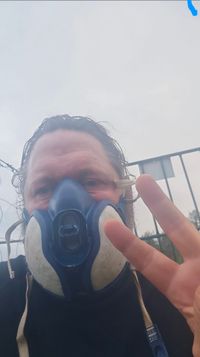
JOHNNY RAY HUDSON

More Posts

The Million-Dollar Life That Mold Took AwayThe Million-Dollar Life That Mold Took Away
The Million-Dollar Life That Mold Took Away

Johnny Ray Hudson built businesses, photographed events, traveled with his father and created an online community numbering in the hundreds of thousands. In 2020, more than $1 million in deposits and credits moved through his Free Pipe Friday business account. Today, he sleeps in a hammock beneath tarps in rural Spain, living almost entirely outdoors with severe Multiple Chemical Sensitivity.

A Special Report

U.S. CITIZEN IN DISTRESS: AN AMERICAN IS DYING IN A FIELD IN SPAINU.S. CITIZEN IN DISTRESS: AN AMERICAN IS DYING IN A FIELD IN SPAIN
U.S. CITIZEN IN DISTRESS: AN AMERICAN IS DYING IN A FIELD IN SPAIN

He is severely disabled. He lives outdoors. He says ordinary buildings can make him dangerously ill, appropriate medical care has become extraordinarily difficult to access, and organization after organization has told him his circumstances are beyond what they can handle. He has asked governments, hospitals, charities, disability groups, churches, friends and family for help. The explanations change. The American remains in the field.

SANTIAGO DE ALCÁNTARA, Spain —

An American citizen is living in a field in Spain.

Read that sentence again.

Not camping.

Not backpacking.

Not spending a summer beneath the stars.

When Even the Hospital Is Out of ReachWhen Even the Hospital Is Out of Reach
When Even the Hospital Is Out of Reach

Johnny Ray Hudson has Grade IV Multiple Chemical Sensitivity. His doctor says hospitals and operating rooms require special environmental precautions. But in a nation with roughly 6,100 hospitals, a deep search of the public record turned up only three U.S. institutions known to have developed dedicated MCS protocols—and every one of those records is more than two decades old.

SANTIAGO DE ALCÁNTARA, Spain — If Johnny Ray Hudson suffers a heart attack tonight, conventional medical advice is simple.

Get to a hospital.

If he suffers a stroke, get to a hospital. If he falls and fractures another bone, get to a hospital. If a wound needs stitches, if an infection turns dangerous, if abdominal pain becomes a surgical emergency, if he needs imaging, medication, oxygen, anesthesia or intensive care, the answer is supposed to remain the same.

A Broken Bone, a Suspected Disease, and a Health System That Couldn’t Treat BothA Broken Bone, a Suspected Disease, and a Health System That Couldn’t Treat Both
A Broken Bone, a Suspected Disease, and a Health System That Couldn’t Treat Both

His clavicle needed surgery. Doctors suspected Multiple Chemical Sensitivity and required further medical evaluation before the operation could proceed. The diagnosis was ultimately confirmed as severe, Grade IV MCS. But the diagnosis did not return Johnny Ray Hudson to the operating room. More than a year later, the documents surrounding his case tell a larger story about what happens when medical care exists — but a disabled patient cannot reliably access it.

About This BlogAbout This Blog
About This Blog
We write for customers, neighbors, and anyone interested in what we do and how we do it. This is a place to stay connected, learn something new, and get a closer look at what’s happening around our business.